Snapshot
-
Category: Intimate Care (Amazon US)
-
Timeframe: 30-day Amazon PPC restructure, with results tracked monthly through a 5-month peak
-
Starting Point: 20.56% TACOS that looked “under control,” but 17%+ of ad spend going to search terms with zero sales — market share flat
-
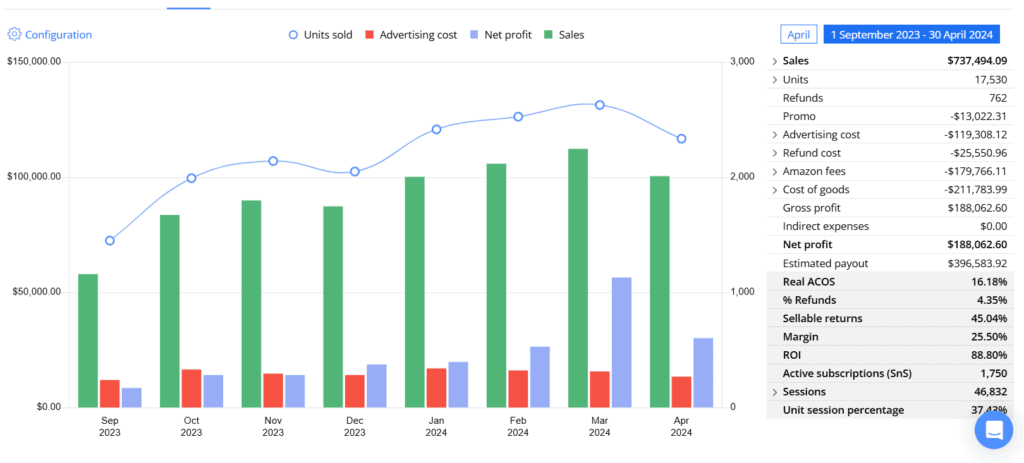
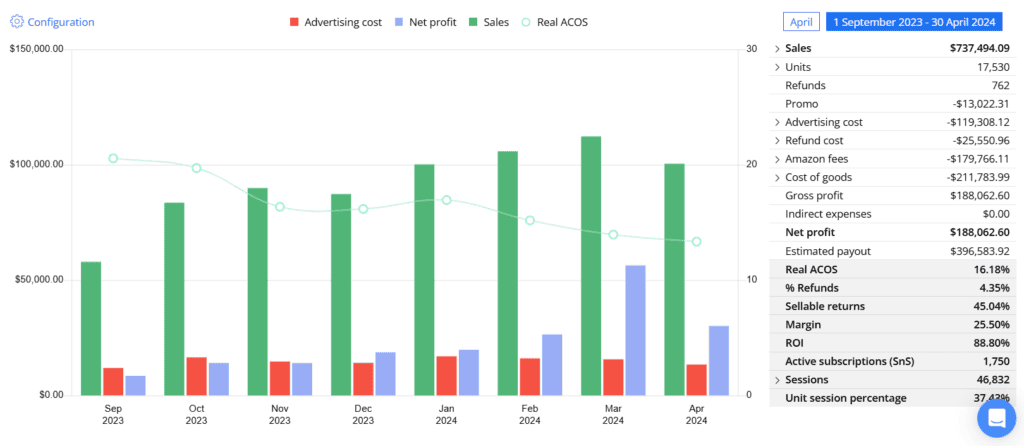
Key Result: TACOS cut from 20.56% to 13.34%; sales nearly doubled to $112,290 and net profit climbed to $30,116 by the 5th month, with ROAS also up from 3x to 3.4x
The Challenge: What the Amazon PPC Audit Found
This Intimate Care brand walked in with numbers that looked fine on the surface. TACOS sat at 20.56%, a range most sellers would call healthy, and Amazon PPC was pulling a 3x ROAS on top of it. There wasn’t an obvious fire to put out.
The problem showed up once I pulled the account apart for a proper PPC audit. Most of the ad budget was sitting in research campaigns — the ones meant to test and expand keyword reach. But those research campaigns had the lowest sales share and the lowest conversion rate in the entire account. More than 17% of total ad spend was going to search terms that hadn’t generated a single sale.
Nothing was losing money in an obvious way. The brand was just burning budget in the wrong place while market share sat flat. A controlled TACOS was masking a structural problem, not solving one.
The Strategy
The goal wasn’t to spend more or less — it was to find out exactly where the existing budget was working, then rebuild the Amazon PPC campaigns around that.
- Split every campaign by match type (Phrase, Broad, Exact) instead of running all three together in the same campaign, which made it possible to see, for the first time, which match type actually converted for each target
- Negated search terms that had pulled 10+ clicks and an 11% historical conversion rate but produced zero sales over the trailing 65 days — spend the blended account-level numbers had been hiding
- Cut bids on targets with low conversion rate and high ACOS, while leaving high-conversion, high-ACOS targets untouched for one more cycle since they were still contributing to organic rank — a decision to revisit later, not an automatic cut
- Pulled the strongest targets — high conversion, low search term impression share, already profitable — into their own dedicated Sponsored Products exact-match campaigns to scale them without diluting performance inside broader campaigns
- Identified search terms with 3,000+ monthly search volume and ran dedicated ranking campaigns against them
- Moved profitable targets up into Sponsored Brands, testing headline ads built around the actual intent behind each search term, alongside video ads using the same angle
- Tested the brand’s ASINs in Sponsored Display as a standard expansion step
The Results
Thirty days after the restructure, the account already had a different shape. TACOS started dropping right away, and market share began climbing instead of holding flat.
The trend held as the months went on. TACOS dropped from 20.56% to 13.34%. Sales nearly doubled, climbing from $57,912 to $112,290 by the fifth month — the peak of the period. Net profit grew right alongside it, up from $8,476 to $30,116, and ROAS climbed from 3x to 3.4x as the lower TACOS freed up room to push harder on what was already working.
An Intimate Care portfolio scaling sales and profit together while TACOS keeps trending down, not up.
The bigger shift was qualitative. The account stopped just looking fine and started actually growing — and the wasted spend that used to hide inside blended ROAS reporting was now visible and actionable every month, not just during a one-time audit.
Ready to Find Your Own Wasted 17%?
A TACOS that won’t move usually isn’t a strategy problem — it’s a structure problem hiding inside the numbers. If your Amazon PPC campaigns look fine on paper but your market share won’t move, that’s worth a closer look.